
Introduction
“Business analytics” refers to using data, statistical analysis, and machine learning for decision-making. Importance of Analytics in Business Helps in improving efficiency, understanding customer behavior, and driving strategy.
Key Functions of Business Analytics
-Descriptive Analytics
-Diagnostic Analytics
-Predictive Analytics
-Prescriptive Analytics
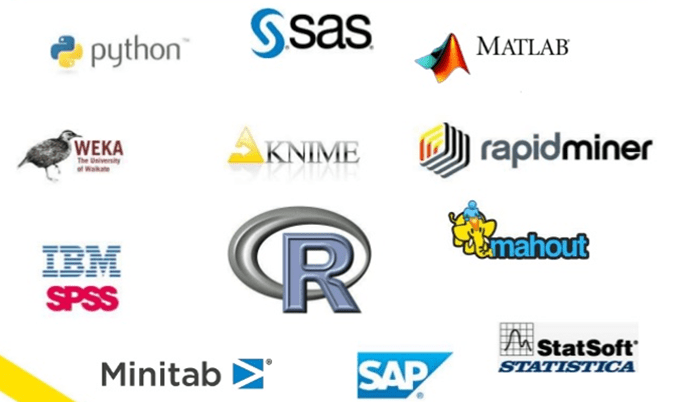
Data Analysis and Statistical Software
Python: A versatile programming language with powerful libraries like NumPy, Pandas, SciPy, and Matplotlib for data manipulation, analysis, and visualization.
R: A statistical programming language specifically designed for data analysis and visualization. It excels in statistical modeling, machine learning, and data mining.
SAS: A comprehensive statistical software suite used for advanced analytics, data mining, and predictive modeling.
SPSS: A user-friendly statistical software package for data analysis and predictive modeling.
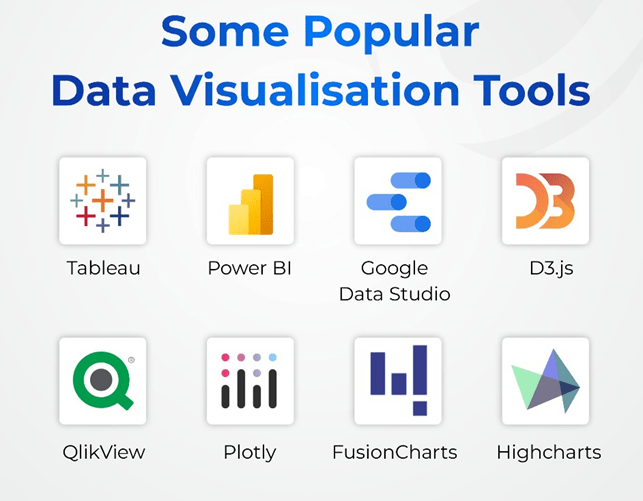
Data Visualization Tools
Tableau: A powerful data visualization tool that allows users to create interactive dashboards and visualizations.
Power BI: A Microsoft product that provides comprehensive business analytics capabilities, including data visualization, reporting, and data modeling.
QlikView: A data discovery and visualization tool that enables users to explore data and uncover insights.
Plotly: A Python library for creating interactive visualizations, including charts, maps, and statistical graphs.
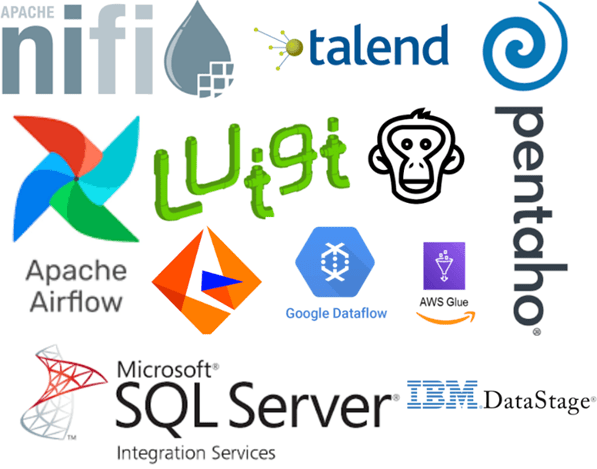
Data Integration and ETL Tools
Talend: An open-source data integration platform that simplifies data extraction, transformation, and loading (ETL) processes.
Informatica: A comprehensive data integration and data quality tool.
Pentaho Data Integration (PDI): An open-source ETL tool for data integration and data warehousing.
Machine Learning and AI Platforms
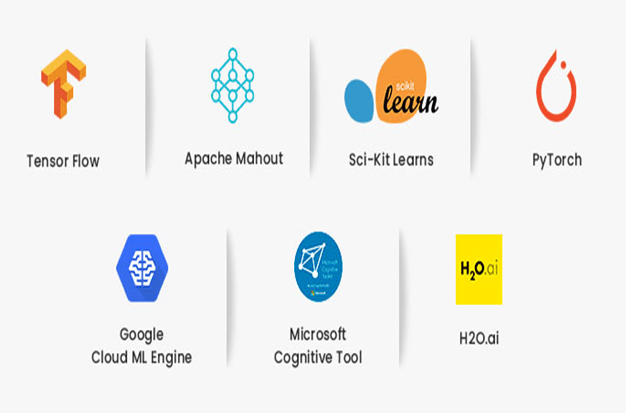
TensorFlow: An open-source machine learning framework developed by Google.
PyTorch: A popular open-source machine learning library for deep learning applications.
Scikit-learn: A Python library for machine learning algorithms, including classification, regression, clustering, and model selection.
H2O.ai: A platform for automated machine learning and predictive analytics.
Big Data Technologies
Hadoop: This open-source framework is designed to process large volumes of data efficiently. It includes tools like Hadoop Distributed File System (HDFS) and MapReduce.
Spark: This is a fast and general-purpose cluster computing system that can be used for both batch and real-time processing.
Cloud Computing
Cloud Platforms: These offer scalable and flexible computing resources for data storage, processing, and analysis.
Examples: Amazon Web Services (AWS), Microsoft Azure, Google Cloud Platform (GCP)
Comparison of different Business Analytics Tools and their Applications
| Tools | Application | Pros | cons |
| Excel | Basic data analysis, visualization, and modeling | User-friendly, versatile, widely available | Limited scalability, manual data cleaning |
| Tableau | Interactive data visualization and exploration | Powerful visualization capabilities, drag-and-drop interface | teep learning curve for advanced features, licensing costs |
| SPSS | Statistical analysis, data mining, and predictive modeling | Comprehensive statistical functions, user-friendly interface | Complex for beginners, licensing costs |
| SAS | Advanced analytics, data management, and business intelligence | Scalable, robust, powerful analytics capabilities | Steep learning curve, high licensing costs |
| Power BI | Self-service business intelligence and data visualization | Easy-to-use, integrates with Microsoft products, affordable | Less flexible than Tableau for advanced visualizations |
| R | Statistical computing and data science | Highly customizable, open-source, large community support | Steep learning curve, requires coding knowledge |
| Python | General-purpose programming language, data science, and machine learning | Versatile, open-source, large community support | Requires coding knowledge, more complex for beginners |
How and when to use different software’s
Tableau Vs Power BI vs QlikView
| Tools | Features | Pros | Cons | Best Suited For |
| Tableau | Interactive dashboards, Drag-and-drop interface, Real-time data connectivity | Easy to use, Visually appealing, Strong community support | Can be complex for large-scale deployments, Limited data preparation capabilities | Exploratory data analysis, Ad-hoc reporting, Data storytelling |
| Power BI | Microsoft ecosystem integration, Real-time data streaming, Natural language queries | Easy to use, Integrates with Microsoft products, Real-time analytics | Limited customization options, Can be less intuitive for complex visualizations | Operational reporting, Data-driven decision making, Predictive analytics |
| QlikView | Associative data discovery, In-memory data processing, Self-service BI | Fast performance, Intuitive interface, Good for exploratory analysis | Steep learning curve, Can be resource-intensive | Data exploration, Real-time analytics, Self-service BI |
Talend Vs Informatica Vs PDI
| Tools | Features | Pros | Cons | Best Suited For |
| Talend | Open-source, Data quality, Cloud integration | Flexible, Customizable, Cost-effective | Steep learning curve, Can be complex to configure | Data integration, ETL processes, Data migration |
| Informatica | Enterprise-level data integration, Data quality, Data governance | Robust, Scalable, Comprehensive | High cost, Complex to implement | Complex data integration, Data warehousing, Data cleansing |
| Pentaho Data Integration (PDI) | Open-source, User-friendly interface, Real-time data integration | Free, Easy to use, Good for small-scale projects | Limited scalability, Less advanced features than commercial tools | ETL processes, Data migration, Data warehousing |
Python Vs R Vs SAS
| Tools | Features | Pros | Cons | Best Suited For |
| Python | Versatile programming language, Extensive libraries (NumPy, Pandas, Scikit-learn), Machine learning | Flexible, Customizable, Open-source | Steep learning curve, Requires programming skills | Data analysis, Data science, Machine learning |
| R | Statistical computing, Data mining, Machine learning | Powerful statistical capabilities, Open-source, Strong community support | Steep learning curve, Less user-friendly interface | Statistical analysis, Data mining, Biostatistics |
| SAS | Advanced analytics, Data mining, Predictive modeling | Robust, Scalable, Enterprise-grade | High cost, Complex to learn and use | Enterprise-level analytics, Risk management, Fraud detection |
Tensorflow VS PyTorch Vs Scikit-learn Vs H2O.ai
| TensorFlow | Scalable, Flexible, Open-source | Powerful, Versatile, Large community support | Complex to learn, Requires strong programming skills | Deep learning, Neural networks, Computer vision |
| PyTorch | Dynamic neural networks, GPU acceleration, Easy to use | User-friendly, Flexible, Strong community support | Less mature than TensorFlow, Can be resource-intensive | Deep learning, Natural language processing, Computer vision |
| Scikit-learn | User-friendly, Comprehensive, Efficient | Easy to use, Wide range of algorithms, Good documentation | Less powerful for deep learning, Limited scalability | Machine learning algorithms, Model selection, Data mining |
| H2O.ai | Automated machine learning, Scalable, Cloud-based | Easy to use, Automated feature engineering, Automated model selection | Can be less flexible than other tools, Requires cloud access | Predictive modeling, Machine learning, Data science |
Choosing the Right Tools
Complexity of data: For simple data analysis, tools like Excel or Google Sheets may suffice. For complex datasets, tools like Python, R, or SAS are more suitable.
Level of technical expertise: Users with strong programming skills can leverage tools like Python and R. For less technical users, tools with user-friendly interfaces like Tableau and Power BI are ideal.
Specific analytical needs: Different tools are better suited for different tasks, such as data visualization, predictive modeling, or machine learning.
Budget: Open-source tools like Python, R, and Tableau Public are free, while commercial tools like SAS and SPSS may have licensing costs.
Conclusion
Business Analytics has become a cornerstone of modern decision-making, enabling organizations to harness data for strategic insights and operational efficiency. The right combination of software tools and technologies—ranging from statistical analysis and data visualization to AI-driven predictive modeling—empowers businesses to optimize performance, enhance customer experiences, and gain a competitive edge. As advancements in cloud computing, artificial intelligence, and real-time analytics continue to evolve, the future of Business Analytics promises even greater accuracy, automation, and accessibility. Embracing these tools and technologies is no longer optional but essential for businesses looking to thrive in a data-driven world.

 time2anlytics.com
Leave a comment