
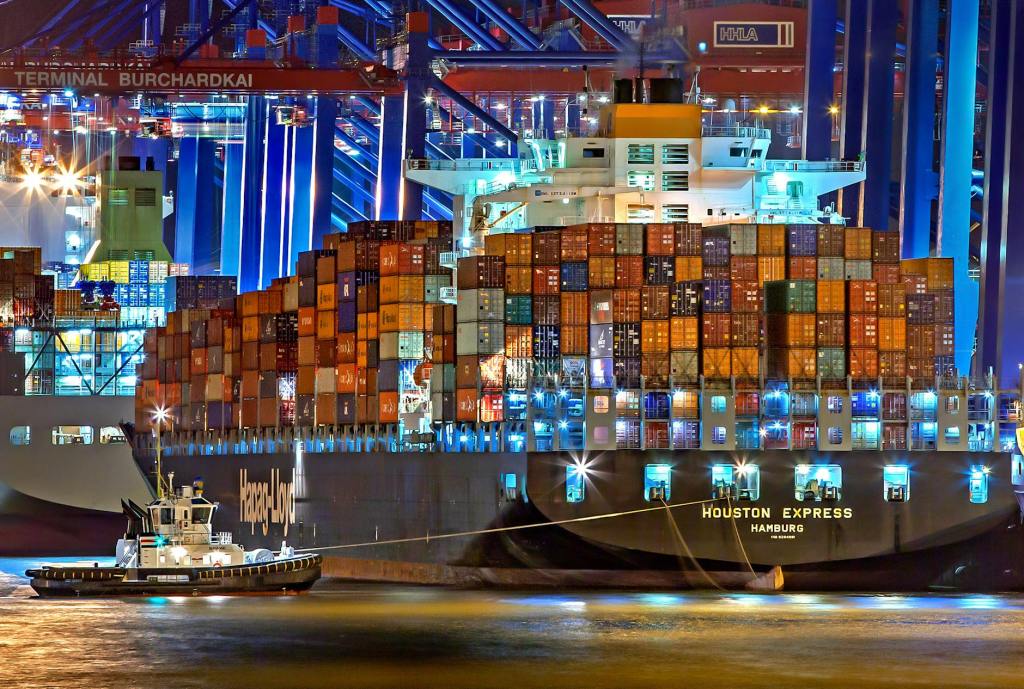
In the ever-evolving landscape of international trade, where decisions span continents and currencies, one thing has become indispensable — analytics. From predicting trade flows to managing supply chain risks and ensuring regulatory compliance, analytics is revolutionizing foreign trade like never before.
Foreign trade is a complex and dynamic sector influenced by global demand, geopolitical factors, economic policies, and supply chain disruptions. In such an environment, data-driven decision-making is no longer optional—it’s essential. Analytics plays a pivotal role in optimizing trade operations, reducing risks, and enhancing profitability.
Welcome to the age of data-driven trade — where decisions aren’t just based on intuition or past performance but are guided by real-time data, predictive insights, and intelligent algorithms.
📘 1. What Is Foreign Trade Analytics?
Foreign Trade Analytics refers to the application of data analysis, statistical modeling, and machine learning techniques to assess, interpret, and optimize trade-related decisions. This includes:
- Import and export forecasting
- Tariff and trade barrier analysis
- Market intelligence and opportunity mapping
- Risk assessment in international logistics
- Compliance and fraud detection
Simply put, analytics empowers businesses and governments to make faster, smarter, and more secure decisions in cross-border trade.
🔍 2. Key Roles of Analytics in Foreign Trade
Let’s unpack the critical areas where analytics adds immense value.
🚢 2.1 Trade Flow Analysis, Forecasting, Customer Insights & Personalization
Goal: Understand and predict what goods are being traded, with whom, and in what volume. Analytics helps traders understand buyer preferences, improving customer engagement through personalized offers and targeted marketing.
Techniques: Time series forecasting, trend analysis, ARIMA, regression
Use Case:
1. A global tea exporter uses historical trade data and seasonal patterns to forecast export demand for green tea in European markets during winter months, optimizing inventory and shipment schedules.
2. An Australian wine exporter uses customer purchase data from e-commerce platforms to tailor promotions for Asian markets, boosting sales.
🛍️ 2.2 Market Intelligence and Opportunity Identification
Goal: Identify new and emerging markets, buyer preferences, and pricing trends. Analytics helps businesses identify lucrative markets by analyzing trends, consumer behavior, and economic indicators. Predictive models assess demand fluctuations, helping exporters and importers adjust their strategies.
Techniques: Market basket analysis, clustering, web scraping, NLP for trade news
Use Case:
1. A spice trader uses web analytics and import databases to discover that demand for Indian turmeric is surging in Eastern Europe post-COVID due to its health benefits. This insight helps reorient marketing and distribution strategies.
2. A coffee exporter in Brazil uses historical trade data and machine learning to predict demand spikes in Europe during winter. By adjusting supply in advance, they maximize profits while avoiding overstocking.
🌐 2.3 Export Competitiveness, Benchmarking and Pricing Strategy
Goal: Evaluate a country or firm’s trade performance against competitors. Analytics helps businesses set competitive prices by comparing global market rates, competitor pricing, and currency trends. Dynamic pricing models adjust in real-time based on demand and supply shifts.
Techniques: Index construction (e.g., RCA – Revealed Comparative Advantage), dashboarding, benchmarking models
Use Case:
1. India’s Coffee Board uses trade analytics to benchmark unit value realization of Indian coffee against Brazil and Vietnam in global markets, helping shape pricing and quality initiatives.
2. A German automobile exporter uses competitor price tracking tools to adjust their quotes in Southeast Asia, ensuring they remain competitive without sacrificing margins.
📦 2.4 Logistics and Supply Chain Optimization
Goal: Improve cross-border logistics, minimize delays, and cut costs. Efficient logistics are crucial in international trade. Analytics optimizes shipping routes, reduces delays, and cuts costs by analyzing port congestion, weather patterns, and fuel prices.
Techniques: Route optimization, simulation models, geospatial analytics, IoT data integration
Use Case:
1. A Bengaluru-based electronics exporter uses predictive analytics and real-time port data to re-route shipments through less congested ports in Singapore, reducing lead time by 20%.
2. A Chinese electronics manufacturer uses real-time analytics to reroute shipments away from congested ports, saving millions in demurrage costs.
🛃 2.5 Tariff, Trade Barrier, and Policy Analysis
Goal: Analyze the impact of tariffs, quotas, and non-tariff barriers on trade decisions. Governments and businesses use analytics to evaluate the impact of trade policies, tariffs, and trade agreements. This helps in negotiating better terms and identifying cost-saving opportunities.
Techniques: Policy scenario modeling, trade elasticity estimation, econometric analysis
Use Case:
1. An export firm uses trade analytics to simulate the impact of new EU carbon tariffs on its carbon-intensive product lines and shifts focus toward cleaner alternatives.
2. A U.S. agricultural firm analyzes tariff changes under the USMCA (U.S.-Mexico-Canada Agreement) to shift exports to Mexico, benefiting from lower duties.
📈 2.6 Risk Management, Fraud Detection & Trade Security
Goal: Detect anomalies, reduce financial and geopolitical risks. Foreign trade involves risks like currency fluctuations, political instability, and regulatory changes. Analytics tools assess these risks by monitoring global events, credit scores of trading partners, and compliance requirements. Fraud in cross-border transactions (fake invoices, under-invoicing, smuggling) is a major concern. AI-driven analytics detects anomalies in trade documents, shipment weights, and transaction patterns.
Techniques: Anomaly detection, machine learning, sentiment analysis
Use Case:
1. A fintech firm offering trade finance uses AI algorithms to flag unusual transaction patterns in export invoices — helping prevent fraud in letters of credit (LC).
2. An Indian textile exporter uses AI-powered risk analytics to evaluate buyers in the U.S., checking creditworthiness and past payment behaviors. This reduces the chances of bad debt and payment delays.
3. Customs authorities in the Netherlands use AI to flag suspicious shipments by comparing declared values with historical data, reducing tax evasion.
📋 2.7 Regulatory Compliance and Documentation
Goal: Ensure adherence to international trade laws, documentation accuracy, and customs requirements.
Techniques: Rule-based systems, NLP for document parsing, workflow automation
Use Case:
An apparel exporter automates its export documentation process using AI-based text extraction from Bill of Lading and Certificates of Origin, reducing errors and saving compliance time.
📊 3. Data Sources for Trade Analytics
| Data Type | Examples |
|---|---|
| Trade Databases | UN COMTRADE, EXIM India, ITC Trade Map |
| Customs & Port Data | Indian Customs, ICEGATE, Port Authorities |
| Logistics Data | Shipping lines, freight forwarders, AIS vessel data |
| Macroeconomic Data | World Bank, IMF, WTO |
| Market Intelligence | News articles, industry reports, social media |
🤖 4. Advanced Analytics Techniques in Foreign Trade
| Technique | Application |
|---|---|
| Machine Learning | Predict export success, price trends |
| Natural Language Processing (NLP) | Analyze trade agreements, policy documents |
| Geospatial Analytics | Track global shipping routes |
| Sentiment Analysis | Understand global buyer feedback |
| Blockchain + Analytics | Track and verify cross-border transactions and origin of goods |
🌍 5. Government-Level Analytics Use Cases
- DGFT India uses analytics to map high-potential products and countries for India’s export promotion.
- CBIC (Customs) uses analytics for risk profiling of import/export consignments to reduce manual inspections.
- WTO & UNCTAD rely on trade analytics to develop trade facilitation indexes and evaluate policy effectiveness.
💡 6. Challenges in Trade Analytics
- Data quality & fragmentation across countries and formats
- Changing trade regulations and tariff structures
- Lack of skilled talent in trade-specific analytics
- Cybersecurity concerns in trade data sharing
These are being addressed with improved APIs, AI-based document parsing, and blockchain-backed secure data sharing platforms.
📌 7. Final Thoughts: Why It Matters
In the post-pandemic, AI-powered, climate-conscious world, foreign trade is no longer a blind expedition — it’s a data-driven journey. Governments want to make informed trade policy decisions. Businesses want to reduce costs, tap new markets, and manage risks. And consumers want transparency.
In this landscape, analytics isn’t optional — it’s a competitive necessity.
🚀 8. Real-World Tools for Trade Analytics
| Tool | Description |
|---|---|
| Tableau / Power BI | Trade dashboards and visual analytics |
| Python / R | Data cleaning, modeling, forecasting |
| UN COMTRADE API | Access global trade datasets |
| ICEGATE / DGFT APIs | Indian customs and export-import records |
| Google Earth Engine | Satellite data for geo-trade logistics |
📌Conclusion
Analytics is revolutionizing foreign trade by enhancing decision-making, reducing risks, and improving efficiency. Businesses that leverage data-driven insights gain a competitive edge in the global marketplace. As technology evolves, AI and big data will further transform trade, making analytics an indispensable tool for exporters, importers, and policymakers alike.
📚 Further Reading and References
- UNCTAD (2021). Digital Economy Report: Cross-border data flows and development.
- World Bank (2023). Trade Watch – Global perspectives on trade data.
- McKinsey Global Institute. (2022). TradeTech: Technology and the future of international trade.
- Indian Ministry of Commerce & Industry – https://commerce.gov.in
- ITC Trade Map – https://www.trademap.org



 time2anlytics.com
Leave a comment