
Authors: Mandar Wagh, Venkatesha G., Raakesh M., Sowmiya A.
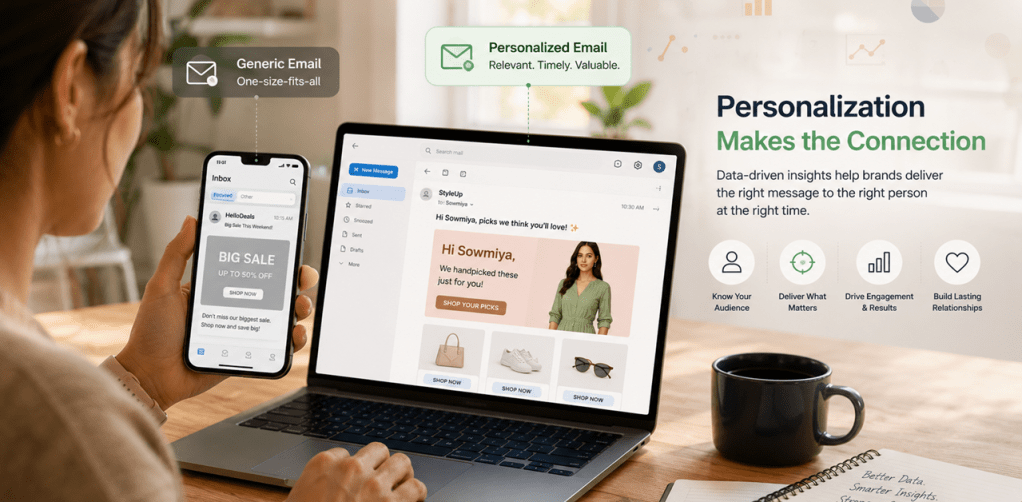
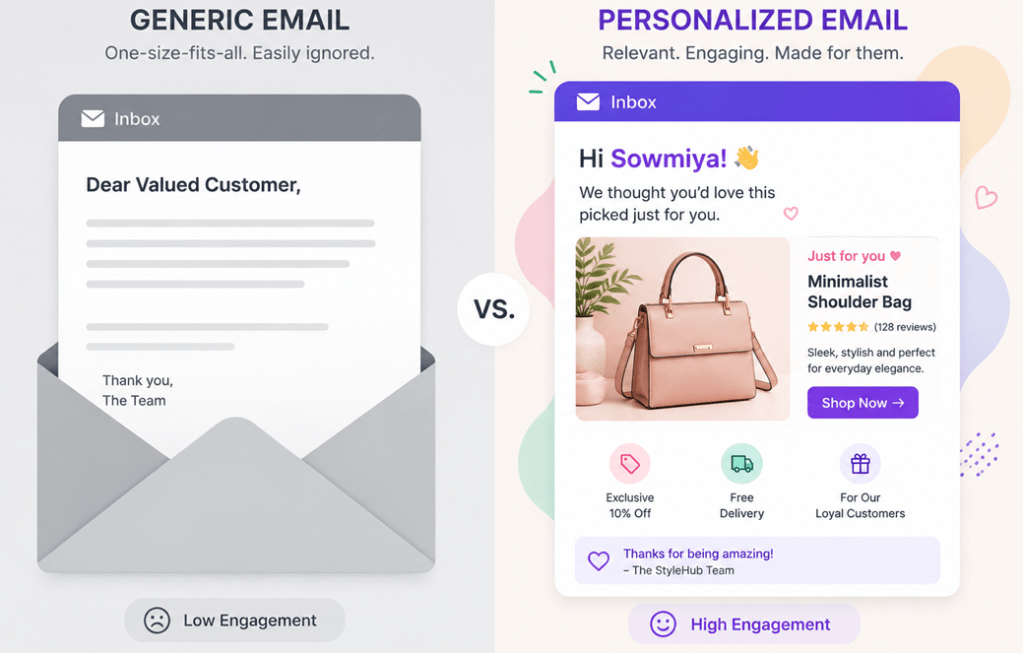
You open your inbox and find two emails waiting. One says, “Dear Valued Customer, Check Out Our Spring Sale.” The other says, “Hi Sarah, the running shoes you looked at last week just dropped 20%, and we think you’ll love this new trail jacket too.” Most people already know which one they would click first.
That small moment explains one of the biggest changes in modern marketing. Brands are no longer speaking to large crowds in the same way. Instead, they are trying to speak to each person as an individual.
Why Personalized Marketing Matters Today?
Not long ago, marketing was mostly a guessing game. Businesses created one message, sent it to thousands or even millions of people, and hoped it would connect with enough of them to generate results. Today, that approach feels outdated.
Customers now expect brands to understand their preferences, remember their behavior, and offer something relevant at the right time. Research mentioned in the original document shows that 71 percent of consumers expect personalized interactions, while 76 percent become frustrated when they do not get them. That means personalization is no longer a bonus feature. It has become part of the basic customer experience.
This change happened because three things grew at the same time: digital platforms, customer data, and artificial intelligence.
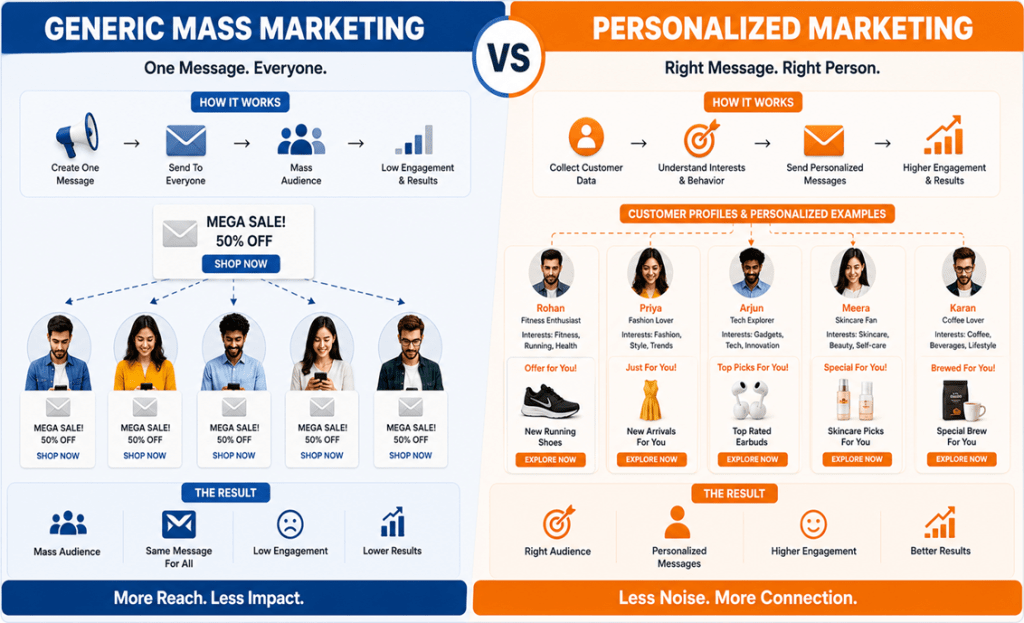
People shop online, browse apps, open emails, watch videos, and interact with brands across multiple platforms every day. Each of those actions leaves behind useful signals. When businesses analyze those signals properly, they can understand what customers are interested in and what they may want next.
The business impact is hard to ignore. The original document notes that fast-growing companies earn 40 percent more revenue from personalization, personalized calls-to-action perform 202 percent better than generic ones, and 80 percent of businesses see higher customer spending when they create tailored experiences. In simple terms, personalization helps customers feel seen, and that often leads to better business results.
What Personalized Marketing Actually Means?
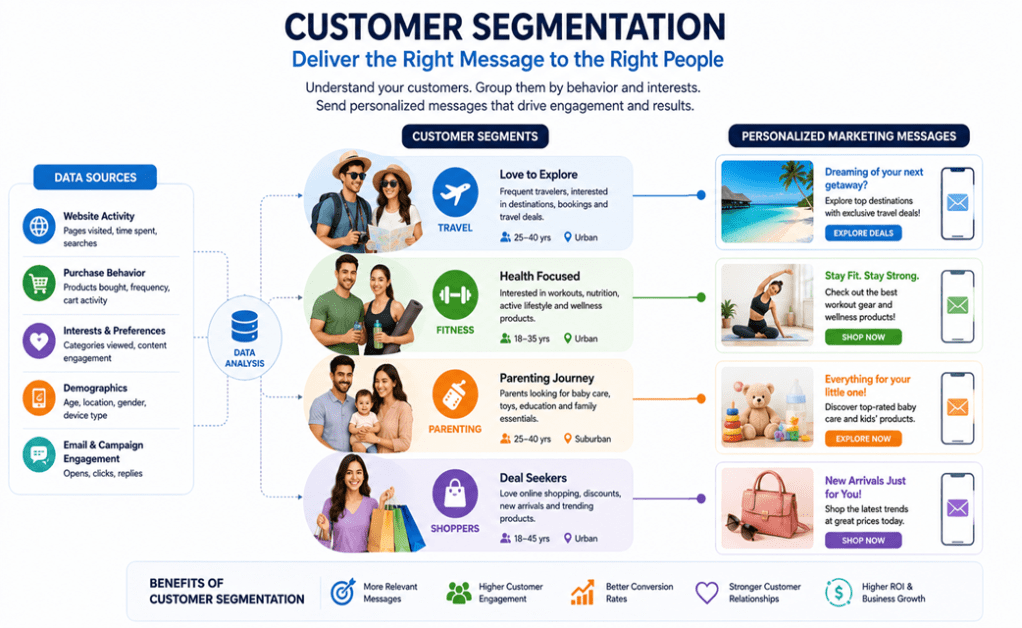
Personalized marketing means using customer data to tailor messages, offers, content, and experiences to individuals or smaller customer groups instead of treating everyone the same.
A simple example makes this easier to understand. Imagine two shoppers visiting the same online store. One is a new parent looking for baby products. The other travels often and usually buys luggage accessories. If both people receive the exact same promotion, the message may feel generic and unhelpful. But if each shopper receives recommendations based on their interests, the brand becomes more relevant and useful.
This is where customer segmentation plays an important role. Segmentation means dividing a large audience into smaller groups based on shared behavior, interests, purchase history, or engagement patterns. Instead of saying, “All customers should see this message,” a business can say, “This group is more likely to respond to this product, while another group may care more about something else.”
Older forms of marketing depended heavily on assumptions such as age, income, or broad demographics. Personalized marketing goes further by using real behavior. It looks at what people clicked, searched, browsed, purchased, ignored, or returned to later. That is what makes the message feel timely and relevant.
How Data Analytics Powers Personalization
Personalization may feel almost magical from the customer’s side, but behind the scenes it is powered by data analytics.
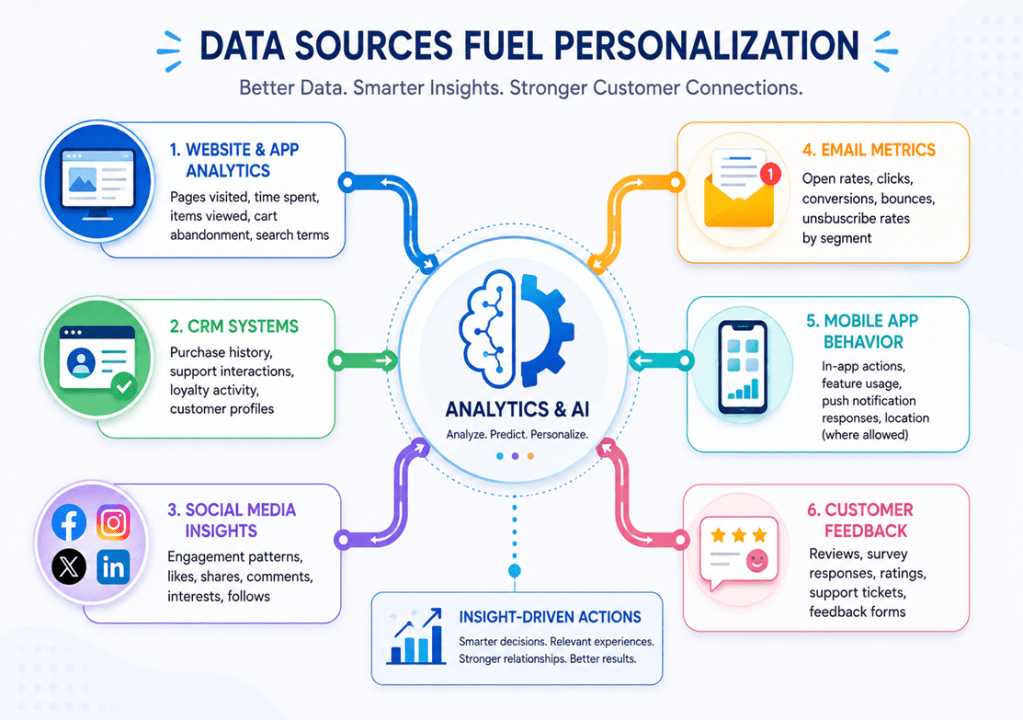
Businesses gather information from several important sources:
- Website and app analytics, such as pages visited, time spent, search terms, and abandoned carts.
- Customer relationship management systems, including purchase history, loyalty program activity, and support interactions.
- Social media insights, which reveal interests and engagement patterns.
- Email performance data, such as open rates, click-throughs, and conversions.
- Mobile app behavior, including actions inside the app and responses to notifications.
- Customer feedback, reviews, surveys, and support conversations.
Collecting data is only the beginning. The real value comes from making sense of it.
Three tools are especially important here:
This helps businesses group people with similar patterns. For example, frequent buyers, first-time visitors, discount seekers, and inactive customers may all need different messages.
Predictive analytics looks at past behavior to estimate what someone might do next. It can help businesses identify customers who may stop buying, shoppers who are ready for another purchase, or products a customer is likely to want soon.
Machine learning helps systems improve automatically as new data comes in. Instead of manually updating every campaign, businesses can let algorithms learn from customer behavior and adjust recommendations, offers, and timing over time.
Together, these tools turn scattered customer actions into useful insights. That is what allows a brand to move from random promotion to meaningful communication.
Personalization in Everyday life: Real Examples
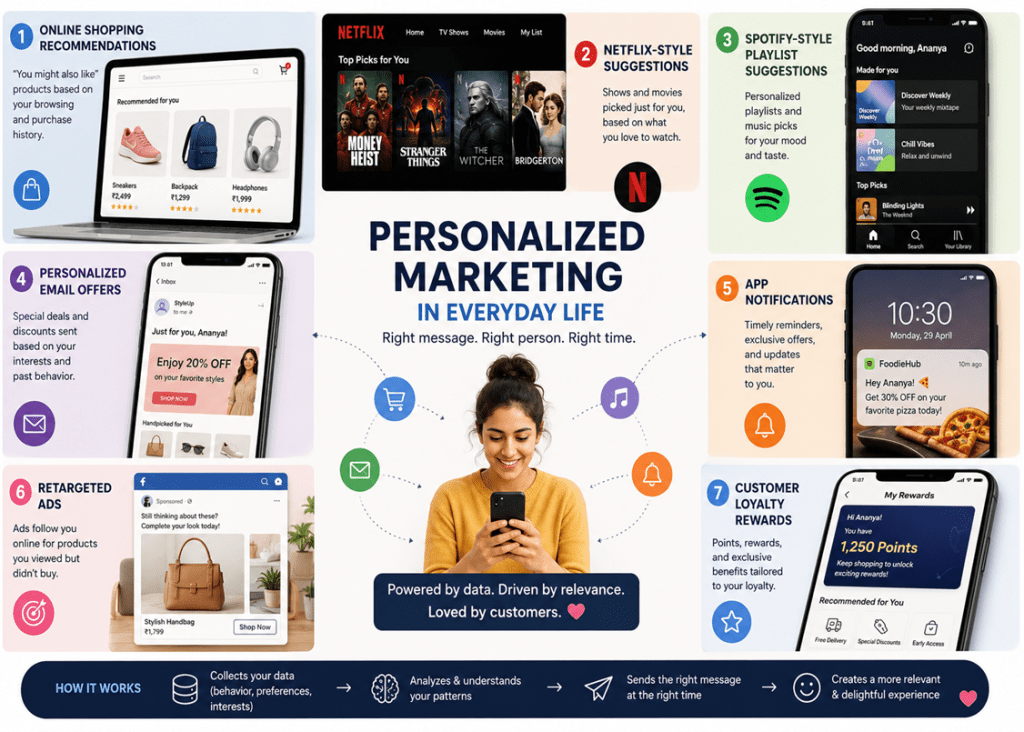
Understanding the theory helps, but seeing how brands actually apply it makes the concept concrete.
- Personalized recommendations: Amazon’s “customers who bought this also bought” feature drives a large share of its revenue by showing relevant products at the right moment; Netflix does the same for shows and movies
- Dynamic website content: returning visitors might see a “welcome back” banner for the category they browsed before, while new visitors see a general introduction
- Targeted email campaigns: Spotify’s “Wrapped” gives each user a unique summary of their own listening habits; segmented emails see 65 percent better open rates than generic ones
- Social media advertising: platforms like Meta and TikTok let brands show different ads to different behavioral segments — fitness content viewers might see running shoes, others see lifestyle sneakers
- Retargeting: shoppers who browse but don’t buy get follow-up ads showing the exact items they viewed, recovering otherwise-lost sales
- Personalized offers: Starbucks’ rewards app sends offers based on a customer’s usual order and timing rather than one coupon for everyone
- AI chatbots: retailers use bots that reference a customer’s own purchase history to resolve questions conversationally
The common thread across all these examples: data analytics turns a mass audience into individuals, and marketing responds accordingly.
Business Benefits of Getting This Right
Businesses care about personalization because it improves outcomes that matter.
When content feels relevant, customers are more likely to click, stay longer, and engage with the brand. When recommendations match real intent, the path to purchase becomes shorter and easier. The original document also points out that 62 percent of business leaders say personalization has improved customer retention.
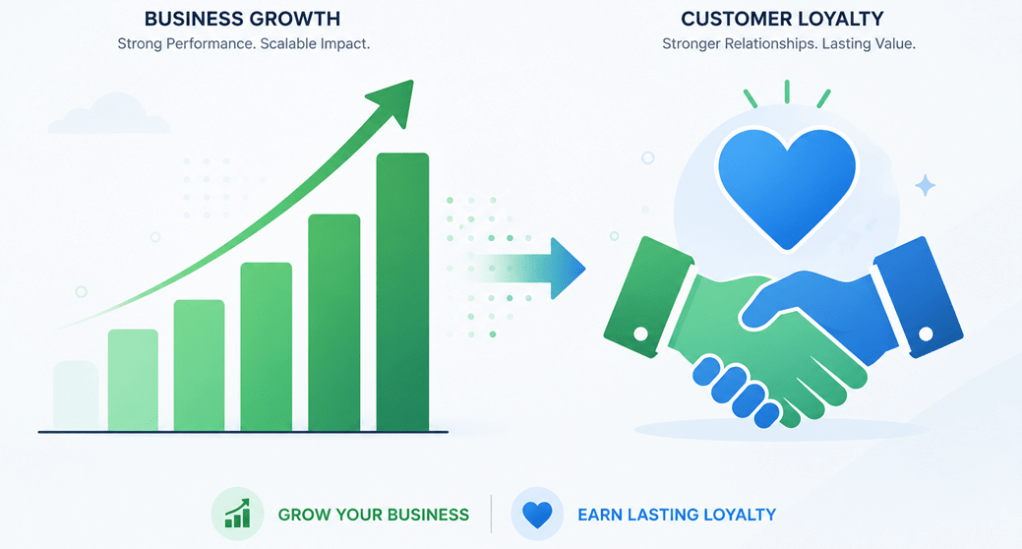
Personalization can also increase customer lifetime value. When a brand understands what someone likes, it can make better cross-sell and repeat-purchase suggestions. This improves return on marketing investment because money is spent more efficiently on people who are more likely to respond.
There is also a relationship benefit. Good personalization signals that a brand respects the customer’s time and attention. It makes the experience feel smoother, more helpful, and less random.
At the same time, poor personalization can damage trust. The original document notes that 49 percent of Gen Z consumers are less likely to buy from a brand that delivers an impersonal experience, while 27 percent may stop shopping there or even share their negative experience with others. In other words, getting personalization wrong can be costly.
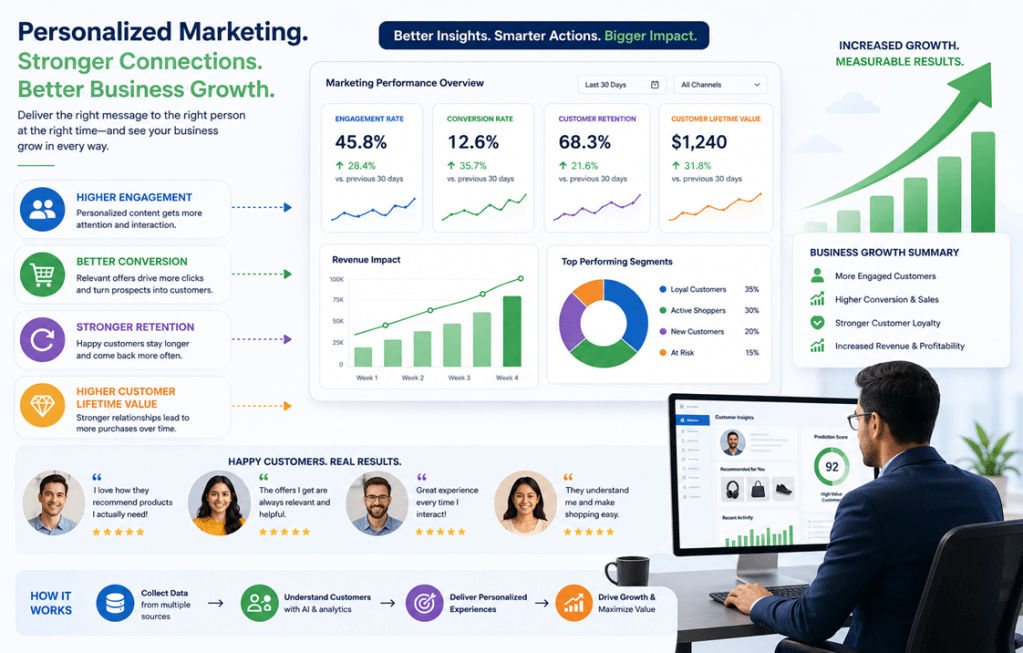
- Higher engagement: relevant content earns more clicks and time on site
- Better conversion rates: matching a recommendation to real intent shortens the path to purchase
- Improved retention: 62 percent of business leaders say personalization has improved customer retention, according to Twilio/Segment
- Higher lifetime value: personalized cross-sells extend the relationship beyond one purchase
- Better marketing ROI: targeted campaigns waste less budget on uninterested audiences
- Stronger brand relationships: personalization signals respect for the customer’s time and attention
Doing this poorly can cost more than doing nothing. Nearly half of Gen Z consumers (49 percent) say they’re less likely to buy from a brand with an impersonal experience, and 27 percent say they’ll stop shopping there entirely or tell others about the bad experience. Personalization has become a baseline expectation, not a bonus feature.
Challenges and Ethical Considerations
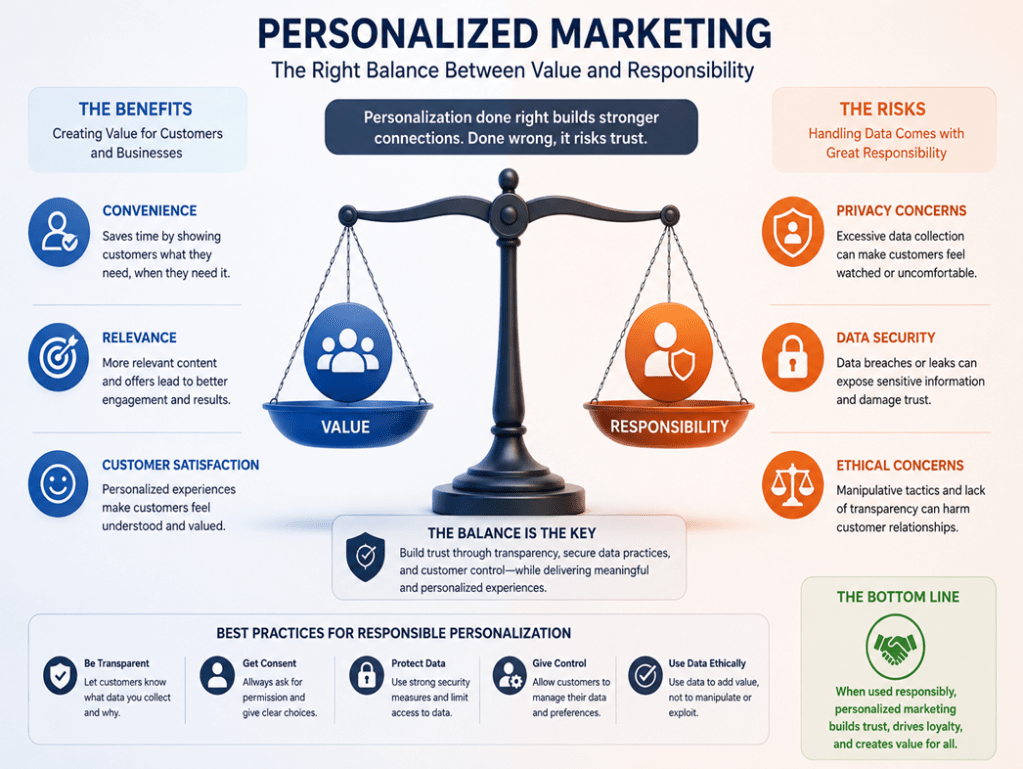
Although personalized marketing offers many advantages, it also raises serious concerns.
Privacy is one of the biggest. Customers like relevance, but they also want control. According to the original document, 58 percent of people want to choose their preferred communication channel and decide the terms of engagement. That means brands cannot simply collect data and use it however they want.
Data security is another challenge. The more information a business stores, the more responsible it becomes for protecting that information from misuse or breaches.
There are also legal and ethical responsibilities. Regulations such as GDPR in Europe and CCPA or CPRA in California require transparency, consent, and clear rights for users. Businesses need to explain what data is being collected, why it is being used, and how customers can manage or remove it.
Trust is the real balancing act. There is a clear difference between helpful and unsettling. Recommending a product based on something a customer knowingly viewed may feel useful. Mentioning information the customer never realized was being tracked may feel invasive.
Too much personalization can also become a problem. If customers feel they are being watched everywhere they go online, even smart marketing can start to feel uncomfortable rather than helpful.
Future Trends to Watch
Personalized marketing is still evolving, and the next stage looks even more advanced.
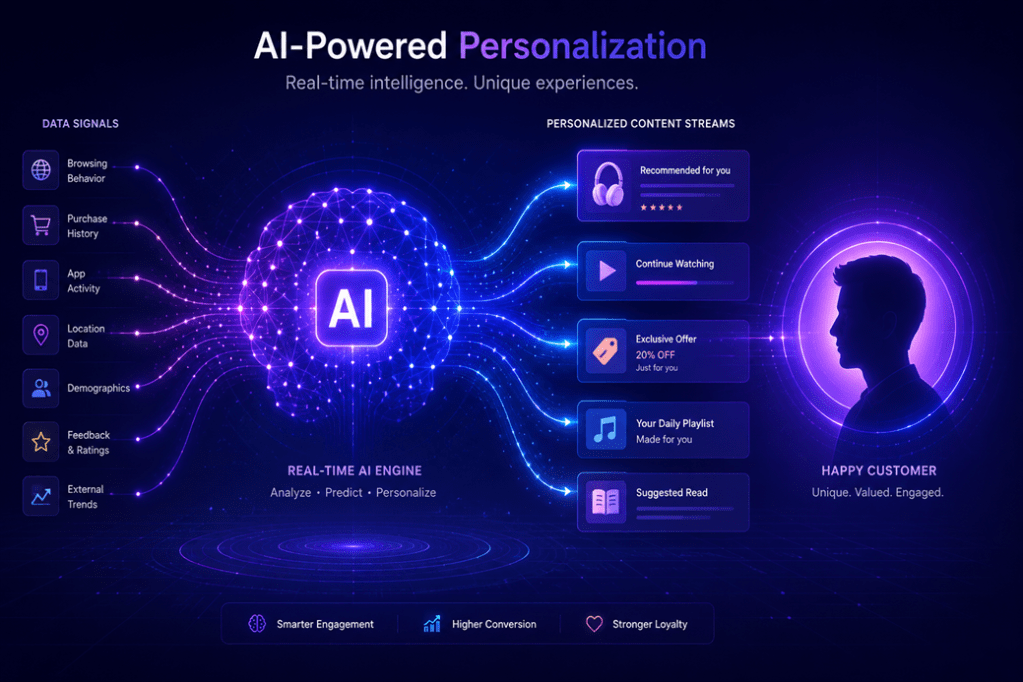
Generative AI is expected to help brands create unique email copy, messages, and creative material for different customer groups in real time. Predictive and prescriptive analytics will not only estimate what customers may do next, but also suggest what businesses should do in response.
Another major trend is hyper-personalization. This means moving from broad segments to highly individual experiences shaped by live customer behavior. Instead of reacting to what someone did last month, systems may adapt during the same browsing session.
The original document also highlights the growing importance of first-party data. As third-party cookies disappear, more businesses are focusing on information collected directly from their own customers through websites, apps, loyalty programs, and direct interactions. This gives brands more reliable data while also encouraging stronger, more transparent customer relationships.
At the same time, omnichannel personalization is becoming more important. Customers do not think in terms of separate channels such as email, app, or in-store. They simply expect a smooth experience everywhere. The future of personalization lies in making those experiences feel connected.
Why This Matters Going Forward
Personalized marketing has shifted from a competitive edge to a basic expectation. Customers have repeatedly shown that they want brands to understand them, and they take their business elsewhere when brands don’t deliver. Data analytics is what makes this possible — turning scattered signals from websites, apps, and CRM systems into one clear picture of each customer.
Brands like Amazon, Netflix, Spotify, and Starbucks succeed not simply because they gather the most data, but because they use it responsibly and turn it into genuinely useful experiences while respecting customer trust. That balance — between sophistication and restraint — is what separates personalization that works from personalization that backfires.
Conclusion
Personalized marketing has moved from being a clever marketing tactic to becoming a basic customer expectation. People want brands to understand their needs, save their time, and offer relevant experiences instead of generic noise.
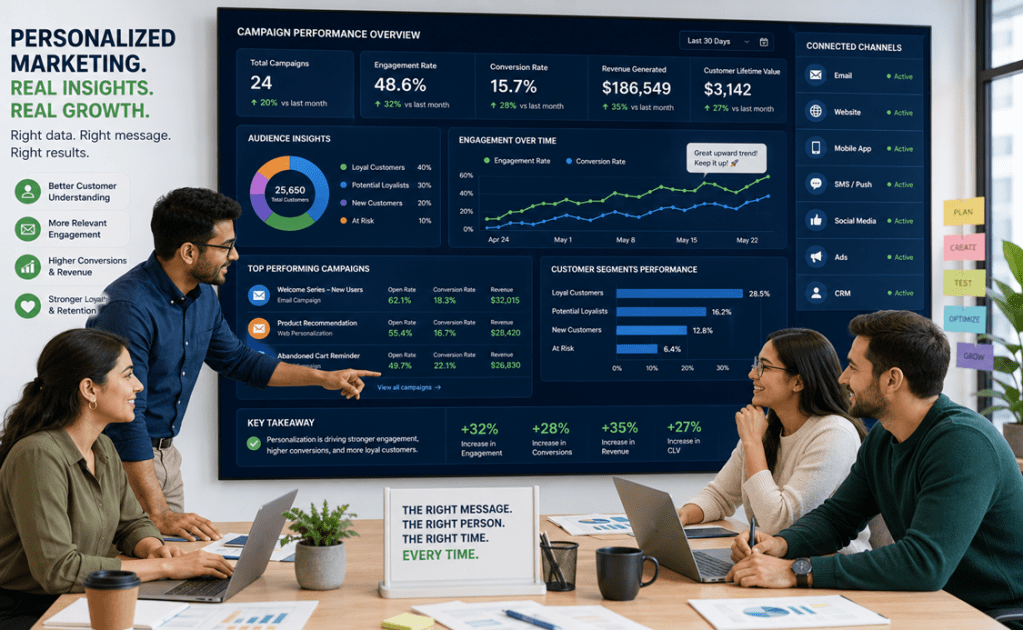
Data analytics is what makes that possible. It turns clicks, searches, purchases, feedback, and behavior into insights that help brands communicate more effectively.
But the real success of personalized marketing does not come from collecting the most data. It comes from using data responsibly, ethically, and intelligently. The brands that succeed will be the ones that combine smart analytics with genuine respect for customer trust.
Key Takeaways
- Personalized marketing means tailoring messages, offers, and experiences using customer data.
- It works because businesses analyze customer behavior instead of relying only on broad assumptions.
- Tools such as segmentation, predictive analytics, and machine learning make personalization possible.
- Brands use personalization in recommendations, emails, ads, apps, and website experiences.
- The benefits include higher engagement, stronger retention, better conversion rates, and improved marketing ROI.
- Privacy, trust, data security, and legal compliance remain critical challenges.
- The future of personalization will be shaped by AI, first-party data, hyper-personalization, and seamless omnichannel experiences.
References
- StackAdapt and Ascend2, Report: Key Trends Shaping Digital Marketing Personalization. Available at: https://www.stackadapt.com/resources/blog/personalization-trends-report-2026stackadapt
- IBM, What is Hyper-personalization? Available at: https://www.ibm.com/think/topics/hyper-personalizationibm
- Forbes, What Role Does Data Play In Customer Experience? Available at: https://www.forbes.com/sites/quora/2020/01/06/what-role-does-data-play-in-customer-experience/forbes
- Oracle, Making Sense of Unified Customer Profiles. Available at: https://www.oracle.com/a/ocom/docs/making-sense-of-unified-customer-profiles.pdf&?ref=sift-ai.ghost.iooracle
- Segment, How IBM scaled its customer data foundation across 150+ countries. Available at: https://segment.com/customers/ibm/segment




Leave a Reply